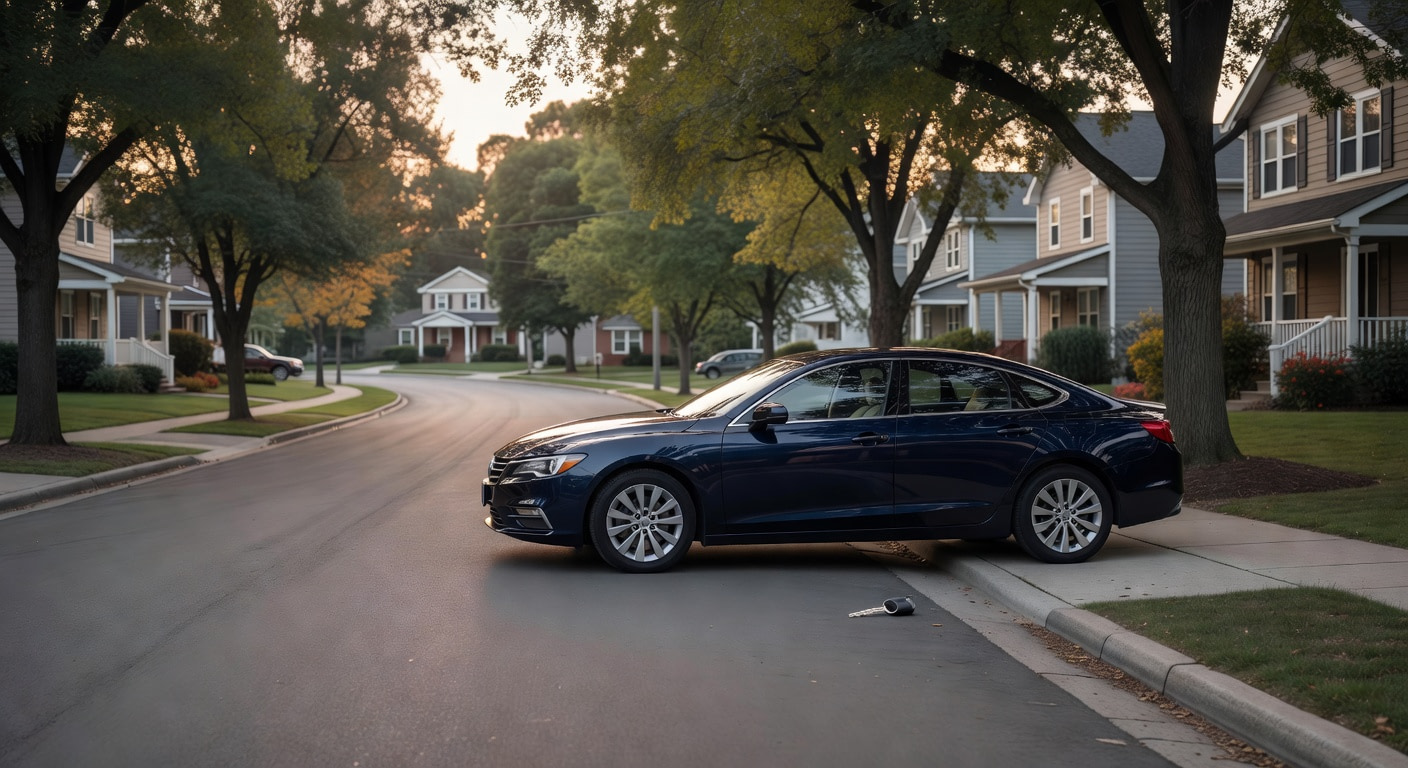
It’s always important to review your deductibles to see what kind of savings you could have.
Reviewing deductibles is one of the simplest ways to change the economics of a car insurance policy, and it’s the lever most often left untouched during a switch. A deductible is the amount you pay out of pocket on a covered claim before the insurance check is written. Raise the deductible and the premium drops; lower the deductible and the premium rises. The right number isn’t about which is better in theory — it’s about which one matches your household’s cash position and your tolerance for paying upfront if a claim happens.
The savings from raising a deductible vary by carrier, vehicle, and driver profile, but the directional answer is consistent: moving collision from $500 to $1,000 typically saves a meaningful chunk of premium each term. Moving comprehensive from $500 to $1,000 saves less but is still measurable. Going from $1,000 to $2,500 saves more again, with diminishing returns past that point. The exact numbers belong on your specific quote, not a generic example — they vary too much to pin down without your data. Our deeper note on the relationship between deductibles and total savings is in how deductibles affect savings.
A higher deductible is only a real savings if you can actually pay it without disrupting the household when a claim happens. Otherwise it’s a deferred problem.
When we run through this with clients, the conversation comes down to three questions. First, what could you write a check for tomorrow without it changing anything in your life? That’s your real deductible ceiling — not the maximum your policy allows, but the maximum your finances allow. Second, how many claims has the household had in the last five years? Households with cleaner claim histories can usually afford higher deductibles because they’re statistically less likely to face one. Third, what’s the vehicle worth? On older vehicles, the deductible can approach the vehicle’s value, which is the point where dropping collision and comprehensive entirely starts to make more sense than raising the deductible further. The full conversation belongs in a broader review — see how to compare auto coverage for context. The switch itself is also a good moment to look at the rest of the policy structure; our note on gaps to watch for when switching covers what else to review at the same time, and whether switching can lower premium without reducing coverage ties the deductible question into the broader savings picture. For broader auto context, our auto insurance overview walks through how we structure these policies.
For most households we work with, $1,000 collision and $1,000 comprehensive deductibles are the right starting point — high enough to generate meaningful premium savings, low enough that the out-of-pocket cost doesn’t disrupt finances. Households with strong savings and clean claim histories often go higher; households early in their financial life or with recent claims often stay at $500. We don’t recommend a default — we recommend a conversation. To see what each deductible level does to your specific premium, request a personal insurance quote and we’ll quote multiple deductible options on the same coverage.



Website Made By Aelieve Digital Marketing